
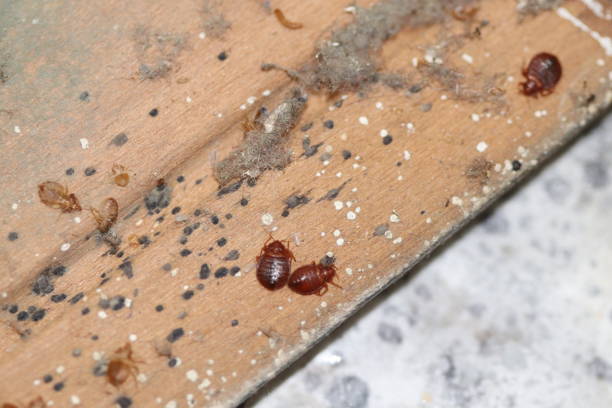
The bed bug is about the same size as an apple seed. The insect’s tiny body is dark red. As the abdomen becomes engorged with blood, it turns a bright red. The insect utilizes its elbow-shaped legs to climb surfaces to access its host’s bed.
Bed bugs cannot fly and travel distances at slow speeds. Feedings usually take place at night or when the host is asleep. The nocturnal behavior allows the insect to feed without being detected. The host probably will not be aware of the feeding until the bite marks are detected on the body. Even so, the host may mistake the bed bug bite for another insect like a mosquito.
Fortunately, bed bugs do not spread diseases. However, the bite can cause an allergic reaction. Bed bug bite allergies start with a small red, edematous bump. Depending on the severity of the allergic reaction, the victim may experience itchiness, a small pustule, or shortness of breath.
Where Do Bed Bugs Hide?
Besides the most preferred hiding spot, the host’s bed, bed bugs seek refuge in tiny, crevices, holes, and gaps in various surfaces. The more bed bugs involved, the vaster the problem becomes.
Once the host’s bed becomes overcrowded, the insects will seek shelter nearby. Electronic devices, home décor, wall hangings, bed frames, wallboards, loose wallpaper, carpet, upholstery, drapery, damaged paneling, baseboards, and electric outlets can easily become bed bug hiding places.
The first place to look for bed bugs is your bed. Starting with the mattresses, carefully inspect the seams, cover, top panel, and vents. During the inspection, there are several signs to be on the lookout for, including:
- Live bed bugs
- Larvae
- Eggs
- Dried blood
- Dried exoskeleton
Bed bugs hide in closets, toy boxes, storage crates, shoes, decorative pillows, sofas, and box springs.
Bed Bug Feedings
As previously mentioned, bed bugs feed when their hosts are asleep. If the host is a day sleeper, the bed bugs feed during the day. The feeding begins with numbing of the skin. The saliva contains properties that act as an anesthetic, which allows the insect to feed without getting detection.
The second step of the process involves injecting the feeding tube into the host’s skin. The feeding tube is injected deep into the skin to access blood. Feedings only last for one to five minutes in most cases.
Bed bugs feed once or twice every 10 d